Rapid water removal and dry-out
We start with extraction and controlled evaporation using commercial dehumidifiers and air movers, sized to the room and the wet materials, not guesswork.
Serving Sacramento, California & surrounding areas
24/7 Emergency Response
When water gets in, time matters. We respond fast, document what happened, and dry the structure the right way so you can protect floors, walls, and air quality before the damage spreads.
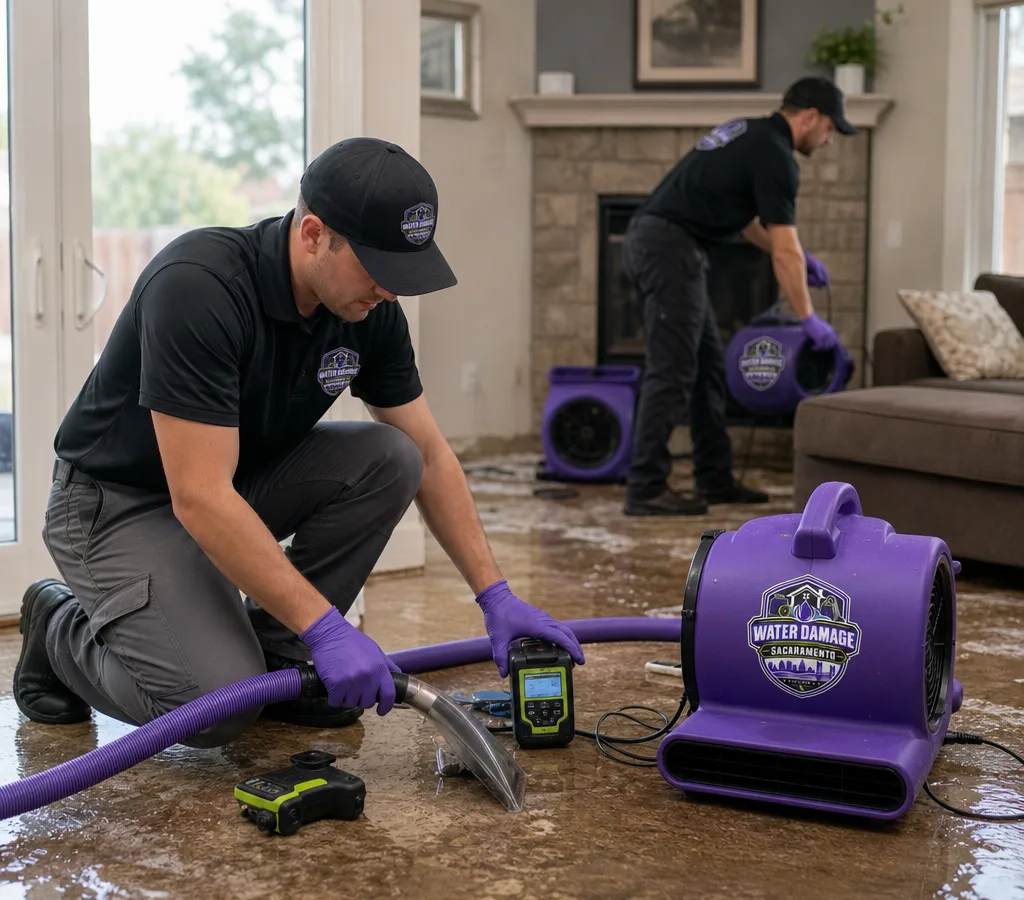
If you are searching for water damage restoration Sacramento, you are usually dealing with an active problem: a supply line break, an overflowing tub, a leaking water heater, or water coming in after a storm. The first goal is simple: stop the source, remove standing water, and start controlled drying before materials swell, delaminate, or grow mold.
A local service contractor can focus on the steps that limit total damage in Sacramento homes and commercial spaces: water extraction, moisture mapping, structural drying, and careful monitoring until the building materials return to a safe moisture level. We keep the work organized and well documented so you have clear records for property management or insurance.
Sacramento has a mix of older homes and newer builds, and that changes how water travels. In Midtown and East Sacramento, older plaster walls, original hardwood, and crawlspaces can hide moisture that looks minor on the surface. In newer neighborhoods with slab foundations, water can spread under flooring and baseboards before it shows up as a visible puddle. Either way, the right tools and a measured drying plan matter more than just running a few fans.
We start with extraction and controlled evaporation using commercial dehumidifiers and air movers, sized to the room and the wet materials, not guesswork.
We check walls, floors, and adjacent rooms with moisture meters and document readings so you can see what is wet, what is drying, and what is already back to normal.
If materials are deteriorating or there is risk of contamination, we set up containment and filtration to reduce the spread of dust and debris during removal and drying.
You receive a written scope of what was affected, what was removed, what was dried, and what still needs repair work after the water is handled.
We look for salvageable materials first, then recommend targeted removal only where water has compromised the assembly or drying is not feasible.
Water rarely stays where it first appears. It wicks up drywall, runs along sill plates, and collects in low spots like closets, hallways, and under vanities. Hardwood can cup, engineered wood can swell at the seams, and carpet padding can stay wet long after the surface feels dry.
In Sacramento, crawlspaces and older framing can complicate drying because airflow is limited and moisture can linger under subfloors. In apartments and mixed-use buildings, water can travel through shared walls and affect adjacent units, which is why we check next-door spaces and below-grade areas when the layout suggests it.
A proper water damage restoration plan is built around what got wet and how wet it is. We set equipment based on psychrometrics—temperature, relative humidity, and material moisture—then verify progress with daily checks until drying goals are met.
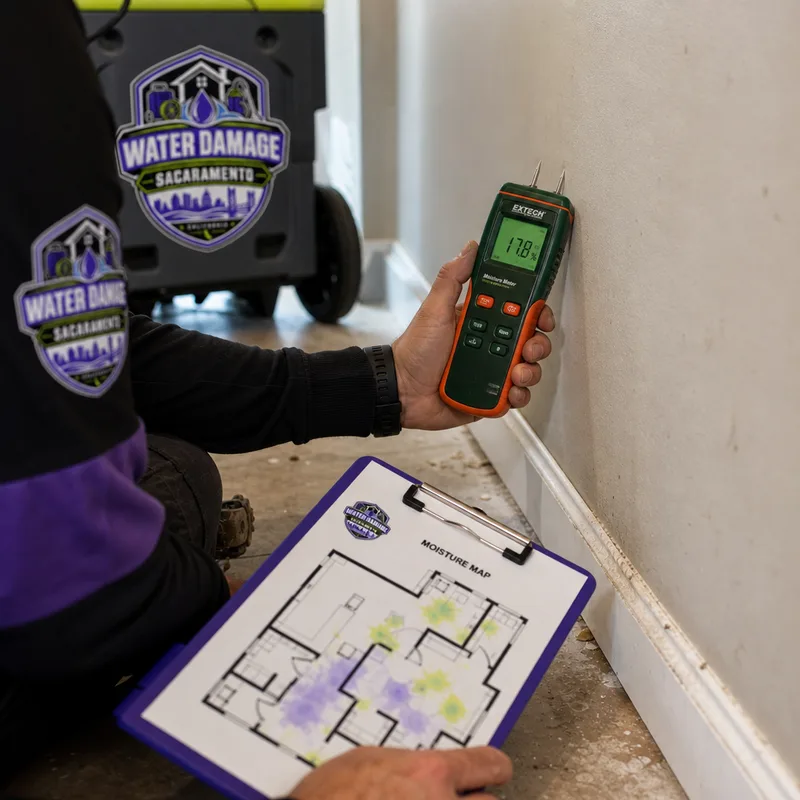
We identify the source (if still active), classify the affected areas, and take initial moisture readings in the wet zone and surrounding rooms to set a drying target.
We remove standing water first. If materials cannot be dried effectively or are already compromised, we remove them selectively—for example, wet baseboards or saturated drywall sections.
We place air movers and dehumidifiers to dry framing, subfloors, wall cavities, and finishes. Equipment placement is adjusted as readings change, not left on autopilot.
We re-check moisture levels and humidity until the structure reaches a stable, dry condition. Then we remove equipment and provide documentation that supports the next phase of repairs.
Water damage restoration in Sacramento typically ranges from about $1,200 to $6,500+, with small, clean-water losses on the low end and multi-room drying with material removal on the high end. A single-room extraction and dry-out often lands around $1,200 to $2,800, while larger losses that affect flooring, drywall, and multiple rooms commonly run $3,000 to $6,500+.
Final cost depends on how long water sat, how many materials are saturated, access to wet cavities, equipment days needed, and whether controlled demolition is required. Exact pricing is confirmed after an on-site inspection and moisture mapping.
If it is safe, shut off the water source and electricity to affected areas. Move valuables and small items out of the wet zone, and avoid running HVAC if you suspect contaminated water or sewage. If you can, take a few photos of visible damage and the source area for documentation.
Avoid these common missteps:
If you are dealing with a contaminated loss, you may need a different protocol than clean-water drying. For situations involving wastewater, the safest approach is a dedicated response such as our sewage cleanup service, because the cleanup, containment, and material handling are not the same as a typical leak.
Water damage restoration should start as soon as you can get safe access, ideally the same day, because water wicks into drywall, subfloors, and cabinetry quickly. In Sacramento homes with wood floors and baseboards, early extraction and dehumidification can reduce swelling and the amount of material that has to be removed.
Most structural drying takes about 3 to 5 days, but the real timeline depends on what materials are wet and how enclosed the wet areas are. Drywall and framing in open rooms can dry faster, while water trapped under flooring or in wall cavities can take longer and requires monitoring with moisture meters.
Not always, but drywall often needs to be removed when it is saturated, crumbling, or preventing wall cavities from drying. A good rule is that we remove only what cannot be dried to an acceptable moisture level, then document the cut lines so repairs are straightforward.
Sometimes yes, especially if the water is clean and the response is quick, but it depends on the floor type and how long it stayed wet. Solid hardwood may be salvageable with careful drying and monitoring, while engineered products can swell at seams or delaminate and may need replacement.
Yes. We provide photos, moisture logs, and a written scope that helps support an insurance claim, and we can coordinate access and documentation with adjusters or property managers. Coverage and deductibles vary by policy, so we focus on documenting conditions and the necessary drying and removal steps.
They overlap, but they are not the same. Water damage restoration focuses on drying and restoring materials after a loss, while mold remediation addresses active microbial growth and requires additional containment and cleaning steps; if you suspect mold, tell us early so the right protocol is used.
Tell us what happened and what areas are affected. We will schedule an on-site inspection, map moisture, and lay out the next steps to dry the structure and protect your Sacramento property.