
Sampling built around the problem
A musty odor in a bedroom, a wet kitchen cabinet, and a crawlspace concern need different sample types and locations. We do not force a one-size package.
Serving Sacramento, California & surrounding areas
24/7 Emergency Response
When a leak, overflow, or damp smell has you worried, get clear sampling and a written report you can act on. We help you confirm what is present, where it is, and what to do next.
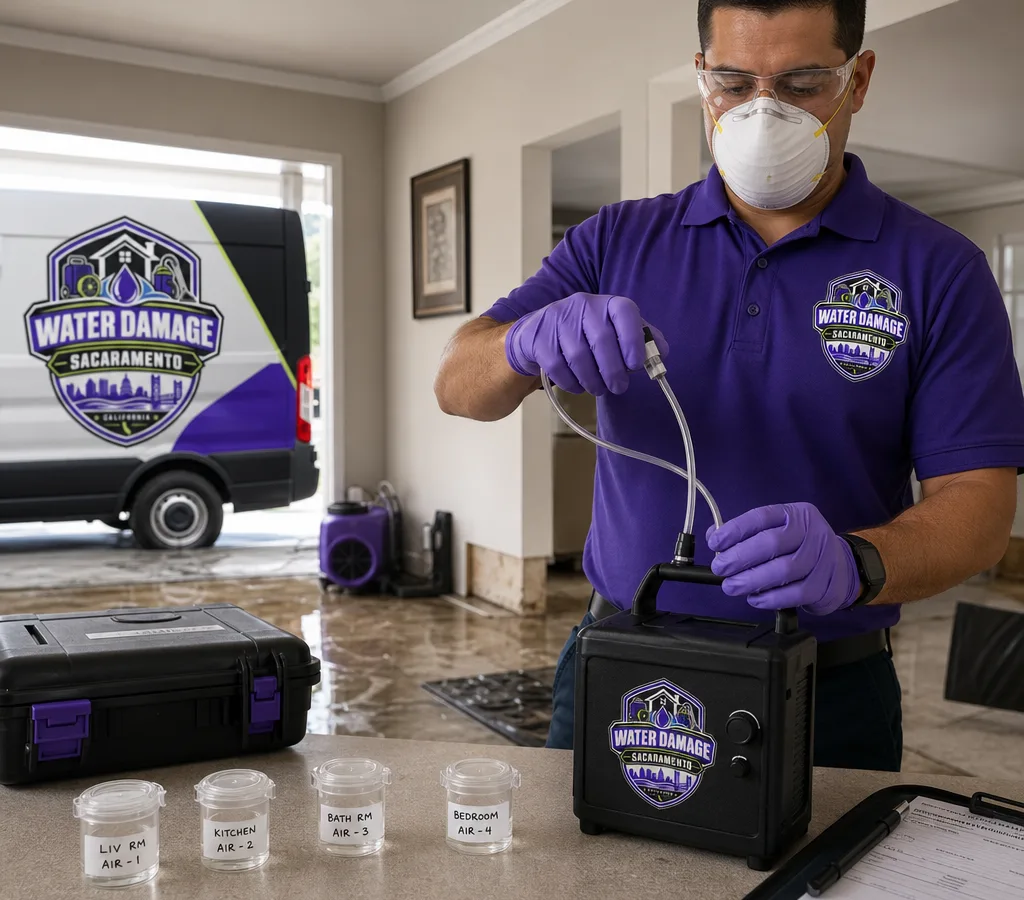
If you are searching for mold testing Sacramento homeowners can schedule quickly, you usually want one thing: certainty. After a supply line leak, roof intrusion, a backed-up drain, or a soaked carpet pad, mold can start growing where you cannot see it—behind baseboards, in wall cavities, under laminate, or inside HVAC returns.
The mold testing in Sacramento focuses on actionable results. We collect the right types of samples for the situation, document conditions on site, and provide clear reporting so you can decide whether drying, cleaning, containment, or removal is needed.
People typically request testing for three reasons:
If you are already dealing with active moisture, addressing the source comes first. Many clients start by talking with a local service contractor about water damage restoration so the space is stabilized, then use testing to verify what remains and what areas still need attention.
A useful mold test is more than a single air sample in the middle of a room. We match the sampling plan to the building layout and the moisture history, then document it so the results mean something.
Typical components include:
In Sacramento, many properties include older plaster, lath, and multi-layer remodels that can hide dampness in odd pockets. Testing helps narrow the search so you are not opening unnecessary areas or missing the one wall bay that stayed wet.
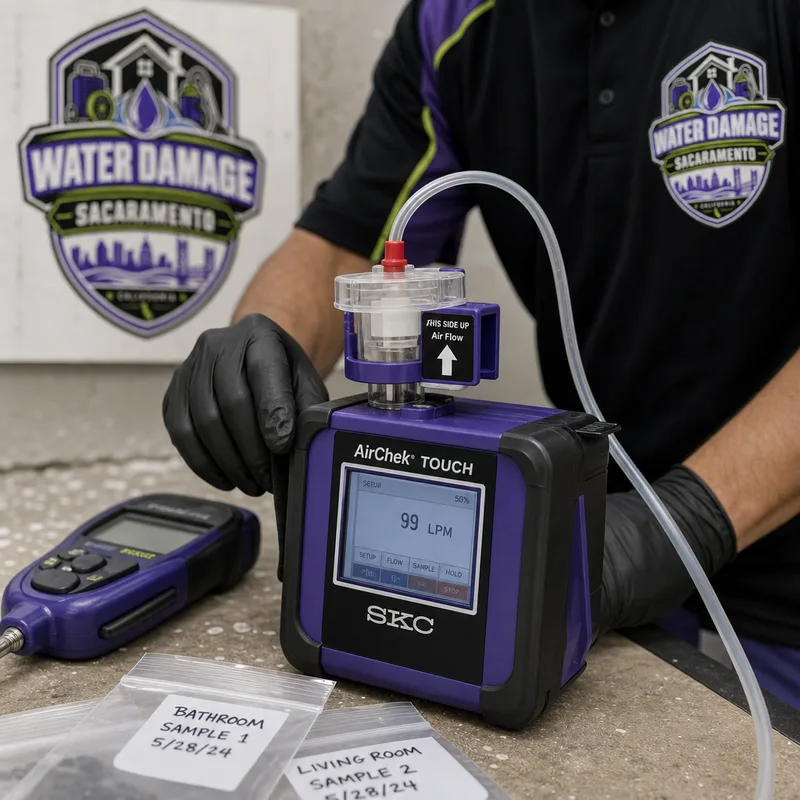
A musty odor in a bedroom, a wet kitchen cabinet, and a crawlspace concern need different sample types and locations. We do not force a one-size package.
You get notes on conditions, where samples were taken, and what the results mean for the next step, whether that is drying, cleaning, containment, or removal.
When timing matters after a leak or flood, we prioritize scheduling so you can stop guessing and move forward with a plan.
We can coordinate access, document findings, and provide straightforward reporting that is easy to share with other decision-makers.
Behind baseboards, under flooring transitions, inside vanity toe-kicks, and at drywall-to-slab edges are common places moisture lingers after a water event.
You tell us what happened—leak, overflow, long-term seepage, odor, or recent repairs—and where you are noticing issues. We explain what testing can answer and what it cannot before any samples are taken.
We walk the affected areas, look for visible growth and water pathways, and check materials for elevated moisture. This step often determines where sampling is actually useful.
We collect air and/or surface samples based on conditions. Each sample is labeled and documented by location so results are tied to a specific room or suspect area.
Samples are submitted for analysis and the results are summarized in a report that connects findings to observations, with practical recommendations for next steps.
If results point to active growth or unresolved moisture, we outline what should happen next and what questions to ask any remediation or restoration team before work starts.
Mold testing in Sacramento typically ranges from about $250 to $850+, depending on how many areas need sampling and whether you need air samples, surface samples, or both. A basic check with 1 to 2 samples is often on the lower end, while larger homes, multi-room concerns, or post-water-damage investigations with several sample locations can cost more.
Pricing changes with the number of samples, ease of access—attic or crawlspace—how much moisture mapping is needed, and how quickly results are required. The exact cost is confirmed after we understand the affected areas and the sampling plan on site.
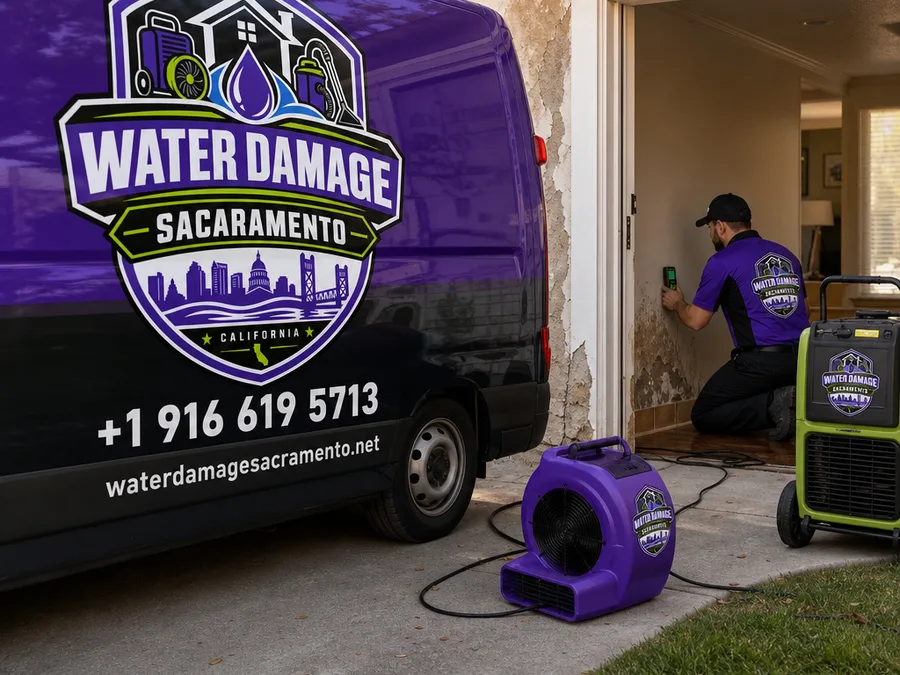
Testing is most useful when it answers a specific decision question, such as whether an area needs to be opened, whether cleanup was effective, or whether a musty odor is likely tied to a particular room.
Good times to schedule mold testing:
Times when testing is usually the wrong first move:
If the original water problem is still unresolved, start with stabilizing the structure and drying. For situations that also involve sewage or contaminated water, the safety and cleanup requirements are different; that is where sewage cleanup becomes the right starting point before any follow-up testing.
In many water-damage situations, testing can be scheduled quickly once the source of moisture is stopped and the space is safe to enter. The best timing depends on what you need to learn: if materials are still wet, moisture mapping and targeted sampling can identify the most at-risk areas; if drying has already happened, post-event sampling can help confirm whether conditions returned to normal.
You need the sample type that answers your question. Air samples help compare indoor conditions to the outdoors and can be useful when there is an odor without visible growth. Surface samples are best when there is visible suspect material and you need lab confirmation. Many investigations use a mix so the report reflects both what is growing on materials and what is circulating in the air.
Testing can narrow the problem, but it is not a GPS for mold. The most reliable approach is combining site observations, moisture screening, and a sampling plan tied to specific rooms or materials. If results suggest an elevated issue in one area, that guides where a careful opening or targeted removal should occur.
We can often identify likely wet areas with non-invasive moisture readings and then sample the air or surfaces around those areas, but direct confirmation inside a closed cavity usually requires access. When access is needed, the goal is minimal, controlled openings in the most likely spots rather than broad tear-out.
Yes, because a documented sampling plan and written report give both parties something concrete to work from. For rentals, we focus on clear locations, conditions observed at the time of testing, and recommendations that help prioritize moisture correction and any needed remediation.
Leave the suspected area as normal as possible for that day. Avoid heavy cleaning, running air purifiers, or fogging products right before sampling because they can skew results. If there was a recent water event, share what was wet, how long it stayed wet, and what drying steps were taken so the sampling plan matches the history.
Tell us what happened, what you are noticing, and which rooms are affected. We will recommend a sampling approach that fits the situation and provide reporting you can use to make decisions with confidence.