
A written scope you can compare
We document the affected areas, what will be removed versus cleaned, what equipment is used, and what conditions must be met before repairs or re-occupancy decisions.
Serving Sacramento, California & surrounding areas
24/7 Emergency Response
If you smell a musty odor, see staining, or have had a recent leak, we can identify the source, contain the affected area, and remove mold safely. You get a clear written scope and practical next steps before any work starts.
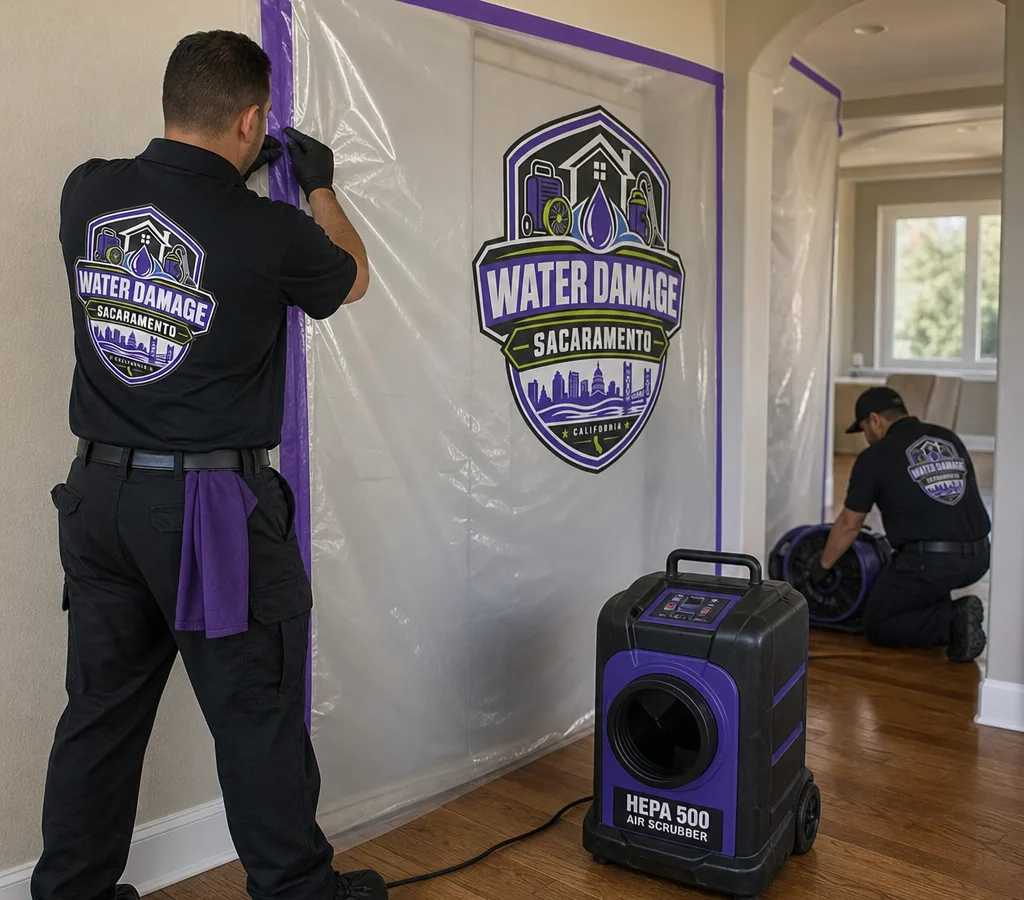
Sacramento mold remediation is more than wiping visible spots. Proper work starts with finding why mold is growing (moisture), then keeping spores from spreading while affected materials are removed or cleaned.
A thorough mold remediation job typically includes:
You should expect your contractor to explain what will be removed, what will be cleaned in place, how containment is set up, and what conditions must be met before rebuild. If any step sounds vague, ask for the written scope and the plan for controlling spread.
In Sacramento, many mold calls start after a plumbing leak under a sink, a shower pan failure, a slow drip behind a wall, or water intrusion that went unnoticed until odor or staining appeared. Once moisture gets into drywall cavities, insulation, or under flooring, growth can develop out of sight.
Local building patterns matter too. Older neighborhoods with a mix of remodeled and original materials can hide layered construction where moisture gets trapped (new flooring over old, patched drywall, older bathroom substrates). Areas with dense shade and limited airflow around the structure can also stay damp longer after rain or irrigation overspray.
If you are in Midtown or East Sacramento with older homes and frequent remodel history, we take extra time mapping how air moves between rooms and cavities so containment is effective. In Natomas, where many homes have slab foundations and modern HVAC, we pay close attention to condensation points and how return air can pull particles through the system. In Land Park and Curtis Park, where crawl spaces are more common, we look for ventilation and ground moisture issues that can feed recurring odor.
If you are trying to understand how remediation fits into the bigger picture of property recovery, a local service contractor can walk you through how containment, drying, and remediation sequencing should be coordinated.
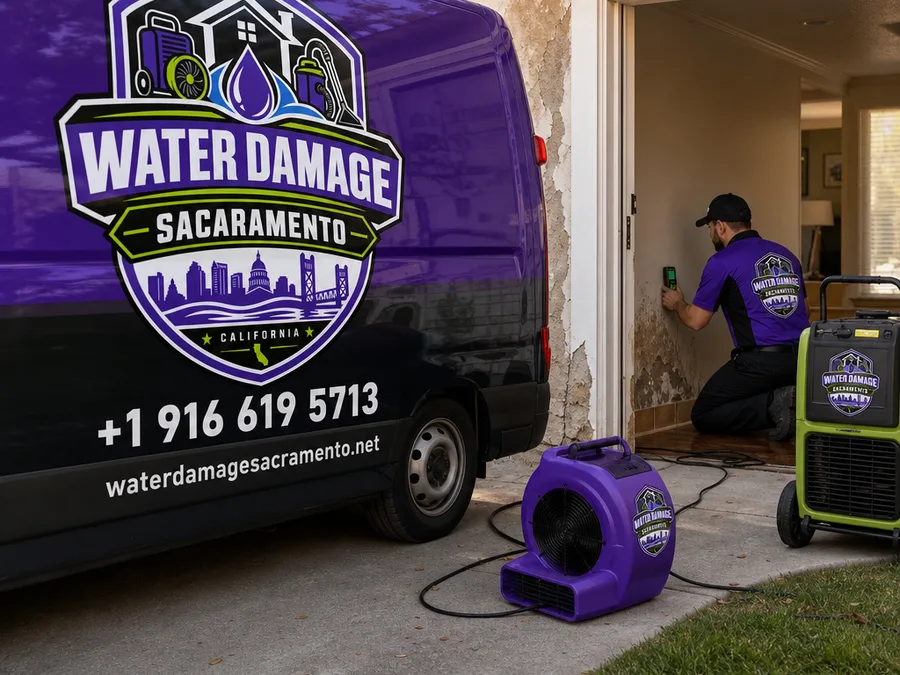
We document the affected areas, what will be removed versus cleaned, what equipment is used, and what conditions must be met before repairs or re-occupancy decisions.
We plan around how you use the space, protecting adjacent rooms and keeping pathways clean so the project does not turn into a whole-house issue.
Remediation only lasts if moisture is solved. We focus on where water is coming from and what materials are staying wet.
For commercial spaces and rentals, we outline access needs, expected downtime by area, and what tenants or staff should and should not do during containment.
When materials can be cleaned safely, we use methods that limit unnecessary demolition while still meeting a sensible remediation standard.
We inspect the visible problem, check adjacent areas that commonly share moisture, and use tools like moisture meters to understand the extent before we propose removal.
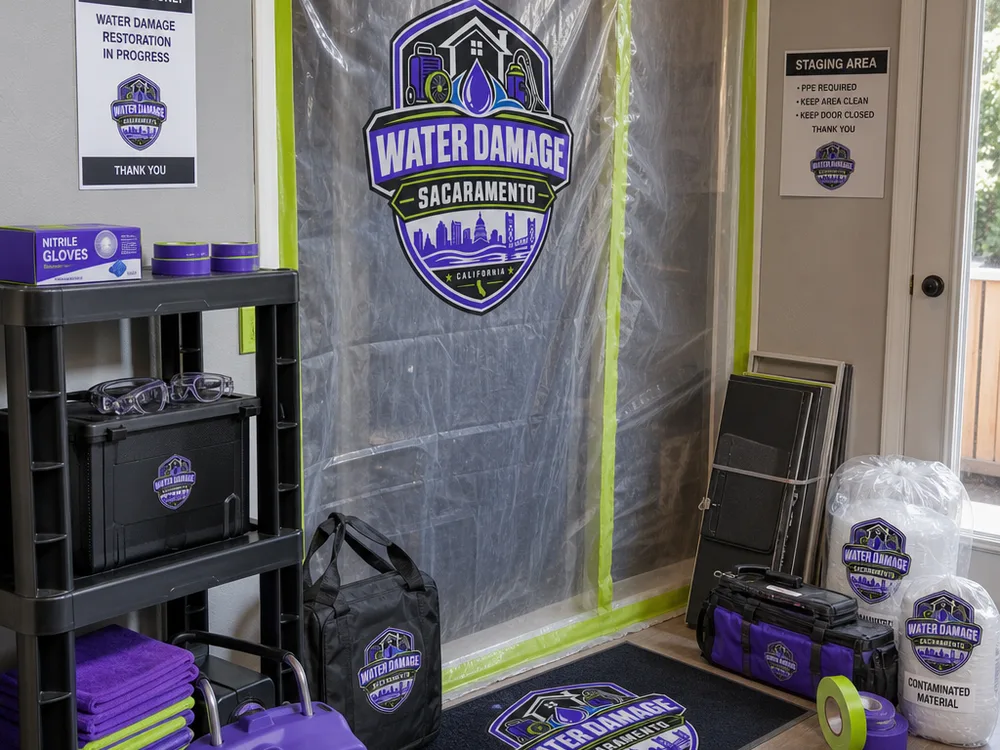
We isolate the affected zone with poly barriers and maintain negative pressure so airborne particles stay controlled during removal and cleaning.
Damaged porous materials are removed in a controlled way. We bag and stage debris to limit cross-contamination through halls, stairways, or shared corridors.
We clean remaining structural materials and surfaces, HEPA vacuum the work area, and address dust that can carry spores to clean rooms.
We set drying equipment as needed and confirm the area is dry enough to proceed. If a hidden moisture source remains, we stop and address it before rebuild planning.
You receive a clear plan for what should be repaired, sealed, or replaced so the same conditions do not repeat. If additional restoration work is needed, it is scoped separately.
Most Sacramento mold remediation projects typically range from about $1,500 to $6,500, with small, contained areas often closer to $1,000 to $2,500 and larger multi-room or HVAC-involved projects commonly running $6,500 to $15,000+.
Your final price depends on how far contamination spreads, how much porous material must be removed (drywall, insulation, flooring), access (crawl spaces, tight chases), the level of containment required, and whether drying equipment is needed. The exact cost is confirmed after an on-site assessment and a written scope.
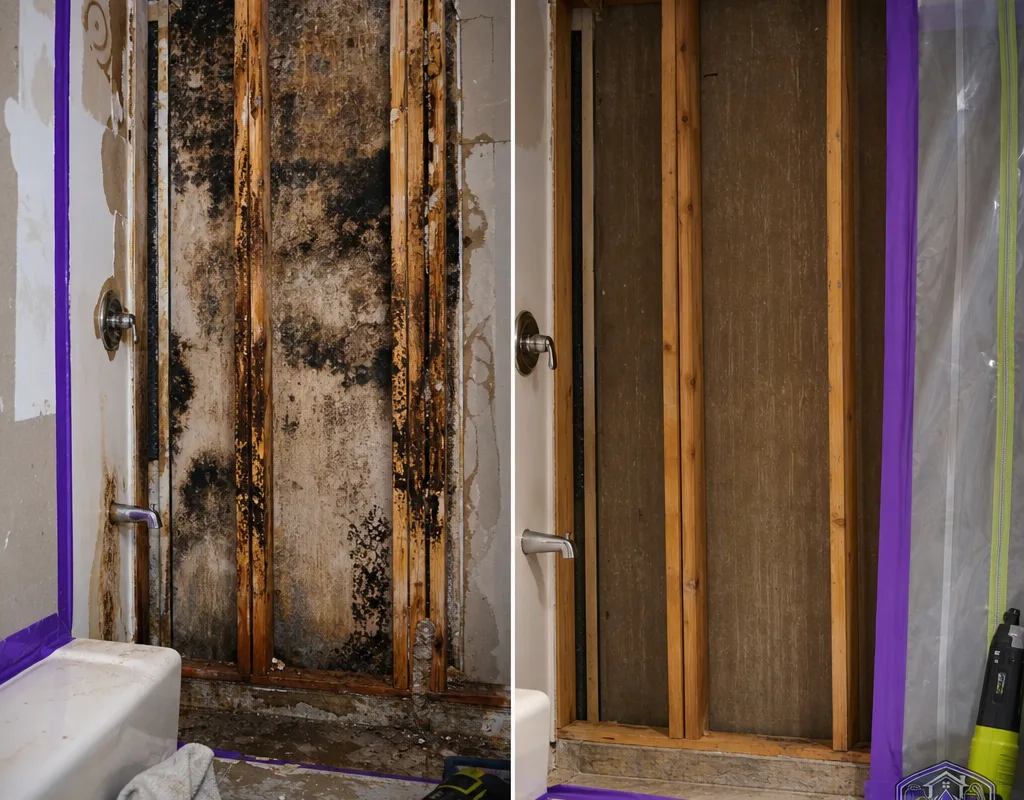
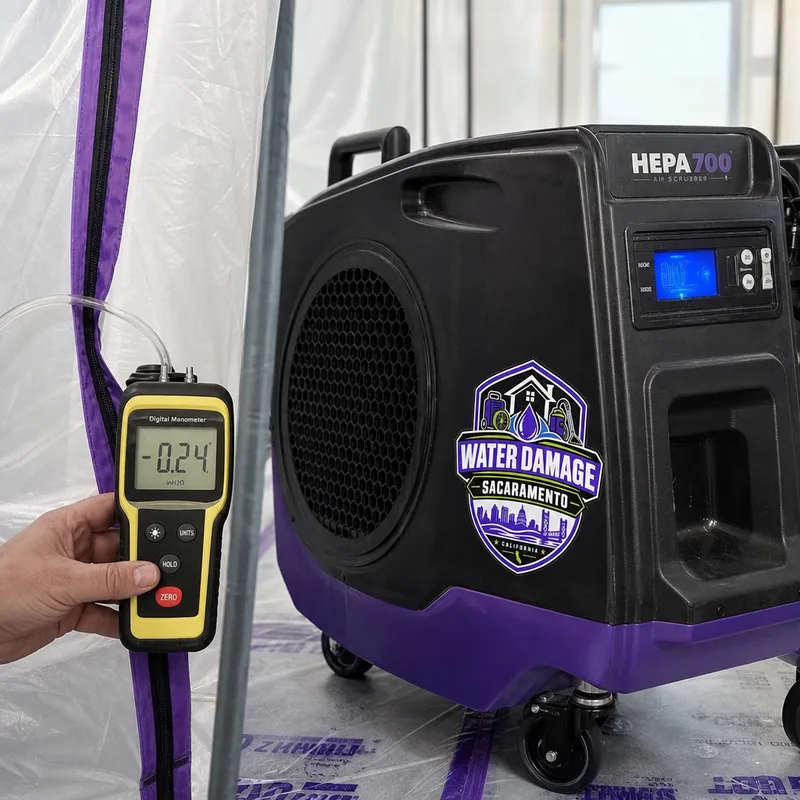
Most jobs take 1 to 3 days for a small contained area, while larger projects can take a week or more if drying and multi-area containment are required. Timeline depends on how wet materials are, how much demolition is needed, and whether access is limited (crawl spaces, stacked units, tight chases). We can usually give a realistic schedule after the on-site assessment and moisture mapping.
Often you can stay in the home if the work area can be fully contained and the affected space is not essential for daily living, but it depends on the location and scope. For example, a contained laundry room or a single bathroom can sometimes be managed, while widespread growth or HVAC involvement usually calls for temporary relocation or at least restricted access. We will explain what areas must be off-limits and how we keep air movement controlled.
Sometimes, yes, but only when the affected material is non-porous or the growth is superficial and the moisture source is fixed. Drywall and insulation are porous, so when mold is established or the material has been wet, removal is commonly the correct approach. A good remediation plan is based on what materials are impacted and where moisture traveled, not just what is visible on the surface.
In many cases we recommend keeping the system off while containment is being set up and during demolition, because airflow can move particles to other rooms. If the system must run for comfort, we plan containment and return-air protection accordingly. If there are signs the HVAC system is involved, we will discuss next steps, which may include targeted cleaning by a qualified HVAC specialist.
We can coordinate testing when it is appropriate, but many property owners choose an independent third-party hygienist for clearance testing to keep the verification separate from the remediation work. If you are managing a rental, a commercial space, or a real estate transaction in Sacramento, third-party clearance is often a practical way to document that the work area is ready for repairs and re-occupancy.
Keep the area closed off as much as possible and avoid disturbing visible growth, because that can spread particles. If there is an active leak, stop the water source if it is safe to do so. Then clear a small working path to the affected area so we can set containment quickly; we will handle protective floor covering and the rest of the setup when we arrive.
If you suspect mold, schedule an on-site assessment with Water Damage Scaramento. We will identify the moisture source, explain what needs to be removed versus cleaned, and provide a written scope you can act on with confidence.