
Bathroom and laundry humidity
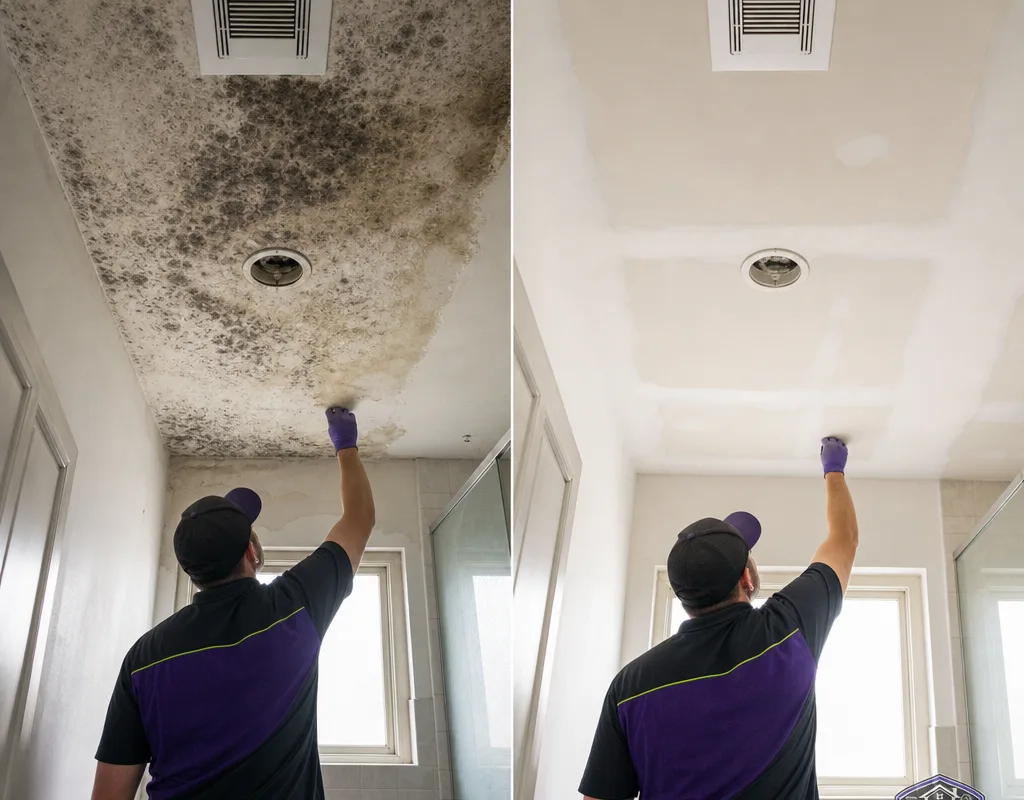
Persistent condensation, weak exhaust fans, and damp grout lines can lead to growth around ceilings, vents, and behind vanities where moisture stays trapped.
Serving Sacramento, California & surrounding areas
24/7 Emergency Response
If you smell musty odors, see staining, or have had a recent leak, we can inspect, contain, remove mold safely, and restore the damaged materials so your home is usable again.
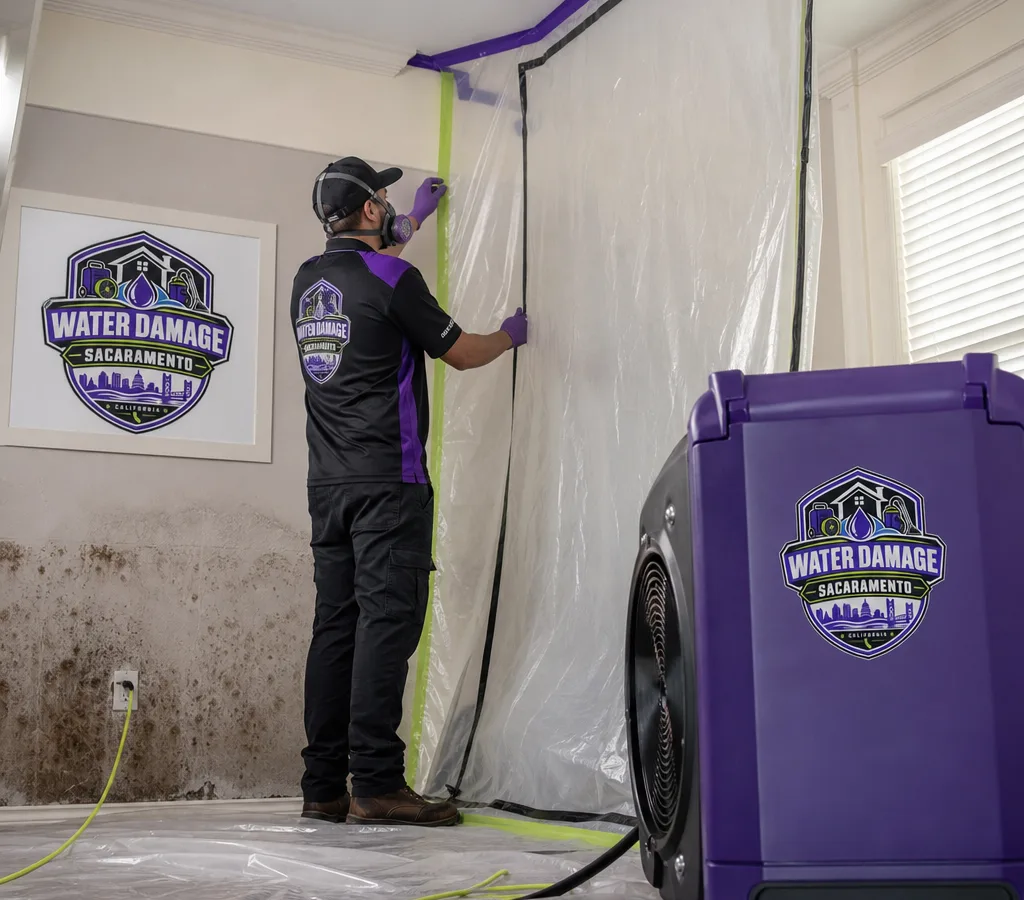
Searching for mold removal Sacramento usually means something specific is happening: a roof leak, plumbing issue, wet crawl space, or a bathroom that never dries out. Mold can spread through porous materials, and the smell often lingers even after the visible growth is wiped away.
Water Damage Scaramento provides Sacramento mold removal with a focus on control and verification. That means we start by finding the moisture source, set containment so spores do not drift into clean rooms, remove or clean affected materials using HEPA methods, and then repair or restore what was damaged so you can move back into a normal routine.
We work across Sacramento, including older housing stock common around Midtown and Land Park where venting, wall cavities, and prior repairs can hide moisture. We also see issues in North Natomas where newer, tighter building envelopes can trap humidity if exhaust fans are undersized or not used consistently. Wherever the mold is, the goal is the same: stop the wet conditions, remove contamination correctly, and leave the space clean, dry, and rebuild-ready.
A proper remediation plan is built around containment and filtration, not masking odors or fogging a room and hoping for the best. When you hire a team for mold removal in Sacramento, you should expect clear steps and documentation of what was done.
Typical elements of a mold remediation job include:
What we avoid: spreading dust through the home, tearing out more than necessary, or skipping the moisture cause. Mold returns when the wet condition remains.
If mold is the result of a recent leak, the remediation scope often overlaps with water damage restoration work like drying and moisture mapping, but the containment and cleaning steps are what make mold removal its own job.
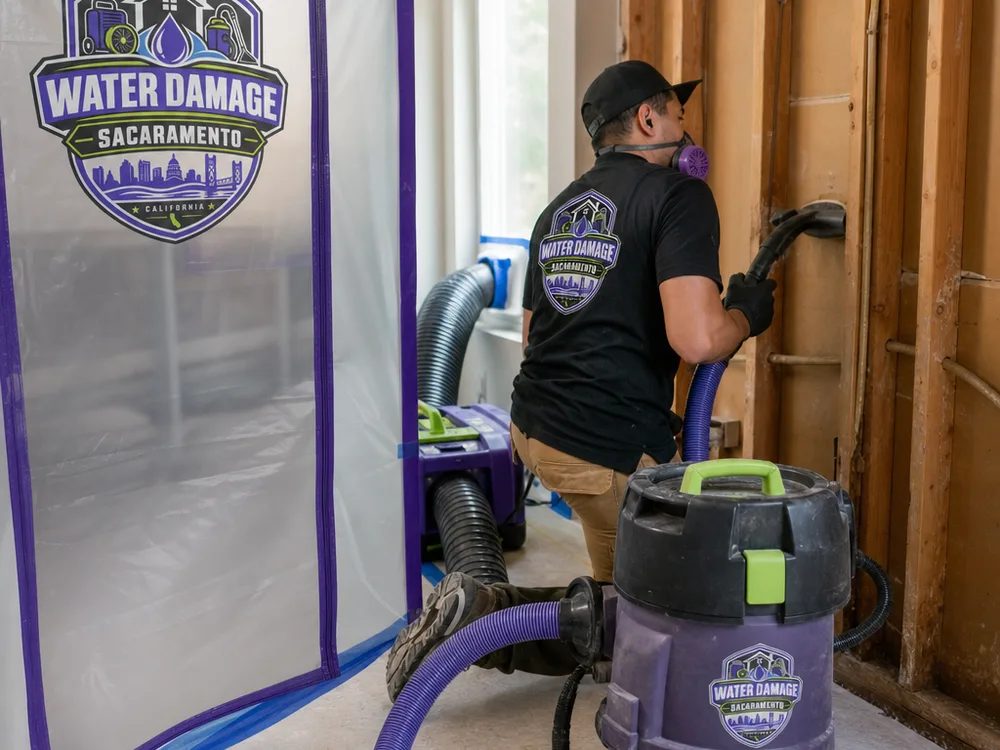
Persistent condensation, weak exhaust fans, and damp grout lines can lead to growth around ceilings, vents, and behind vanities where moisture stays trapped.
Slow leaks under cabinets often soak particleboard and drywall. Odor and warping are common signs, even when the floor looks fine.
Ventilation issues and ground moisture can impact joists and insulation. Remediation may include cleaning, targeted removal, and drying verification.
Small roof penetrations or flashing issues can wet sheathing and insulation. The fix includes identifying the wet pathway and removing affected materials safely.
Growth near returns, coils, or damp ducts can move odors through the house. Containment and HEPA practices help prevent cross-contamination during cleanup.
We look for where water is getting in or where humidity is staying high. Remediation is planned around the cause, not just the visible growth.
We isolate the work area with poly sheeting and set airflow controls when needed. This keeps spores and dust from drifting into hallways, bedrooms, and HVAC pathways.
Unsavable porous materials are removed in a controlled way, then remaining surfaces are HEPA vacuumed and cleaned. We choose methods based on the material.
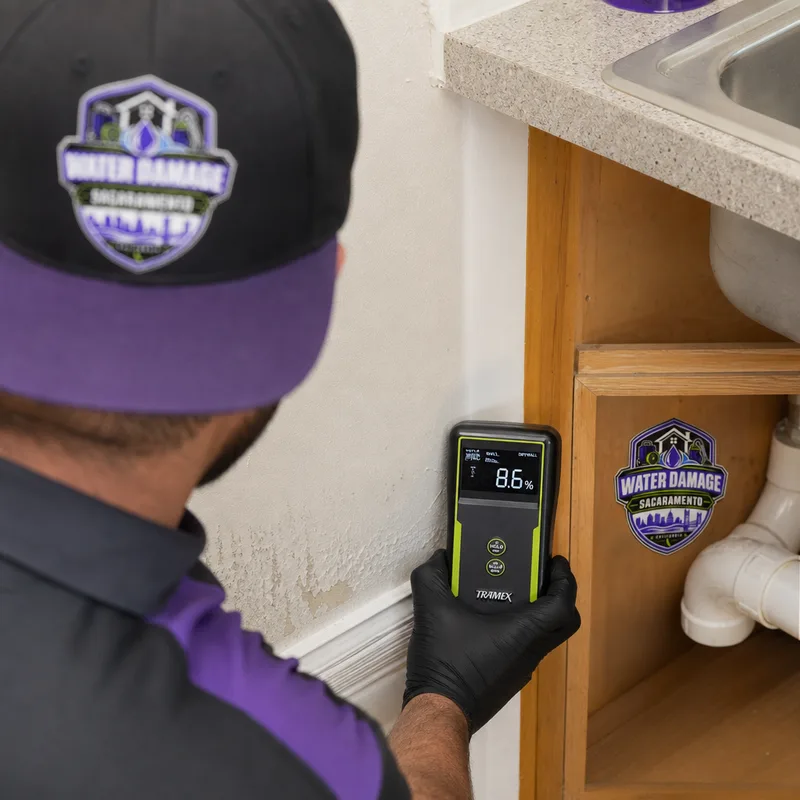
We confirm materials are dry enough to stop regrowth. Moisture checks guide when it is safe to close walls or reinstall flooring.
When remediation requires opening walls or removing cabinets or flooring, we coordinate the rebuild so the space is put back together correctly after cleanup.
Mold removal in Sacramento typically ranges from about $1,500 to $6,500 for many residential projects, with smaller isolated areas sometimes closer to $750 to $2,000 and larger, multi-room or crawl space jobs reaching $8,000+ depending on access and rebuilding needs.
Your final price depends on how far the mold spread, what materials are affected, how much containment is required, whether drying equipment must run for multiple days, and how much repair work follows removal. The exact cost is confirmed after an on-site inspection and a written scope.
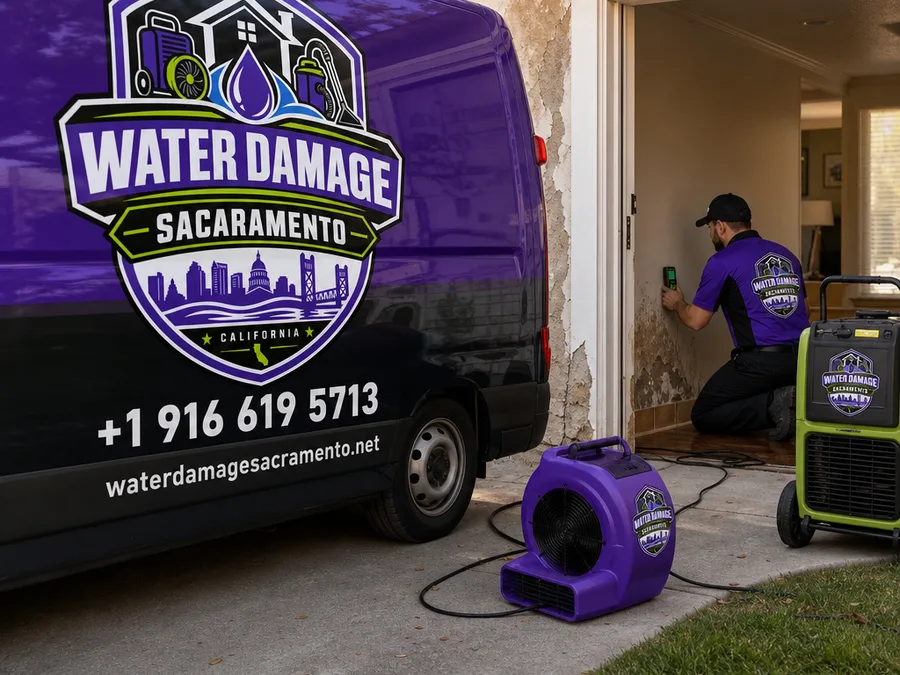
Start times depend on the size of the job and whether containment and drying equipment are needed, but many situations can be scheduled quickly after an initial assessment. If there is an active leak or ongoing wet materials, stopping the water source and starting drying are the first priorities because mold can continue to spread while materials stay damp.
Not always, but it depends on where the mold is and how the home is laid out. If the affected area is a single room that can be fully contained, many households can stay in the home while that room is isolated; if the work impacts primary living areas or HVAC circulation, temporary relocation may be the safer option.
Professional remediation focuses on containing spores, removing contaminated porous materials when they cannot be cleaned, and correcting the moisture condition that caused the growth. Bleach and wipe-downs can miss mold embedded in drywall, wood, or insulation, and scrubbing without containment can spread spores to adjacent rooms.
Sampling is sometimes helpful, but many remediation decisions are made based on visible growth, material condition, and moisture findings. If sampling is requested or needed for a specific reason, it can be coordinated so the remediation scope matches what is found.
Yes, crawl spaces and attics are common locations because they can stay humid or hide slow leaks. The approach usually includes controlled access, HEPA cleaning, and removal of affected insulation or sheathing as needed, plus drying and moisture correction so the problem does not return.
Many single-area projects take 1 to 3 days for containment, removal, and cleaning, plus additional time if drying must run or if repairs are required after remediation. The timeline depends on how wet the materials are, how much demolition is needed, and when the area tests dry enough to rebuild.
Tell us what you are seeing and where it is showing up. We will schedule an inspection, explain the containment and removal steps, and provide a written scope for your Sacramento mold removal and restoration work.